Choose Public and Private Knowledge Boundaries
Choose appropriate visibility for community knowledge while protecting customer context and keeping useful general guidance discoverable.
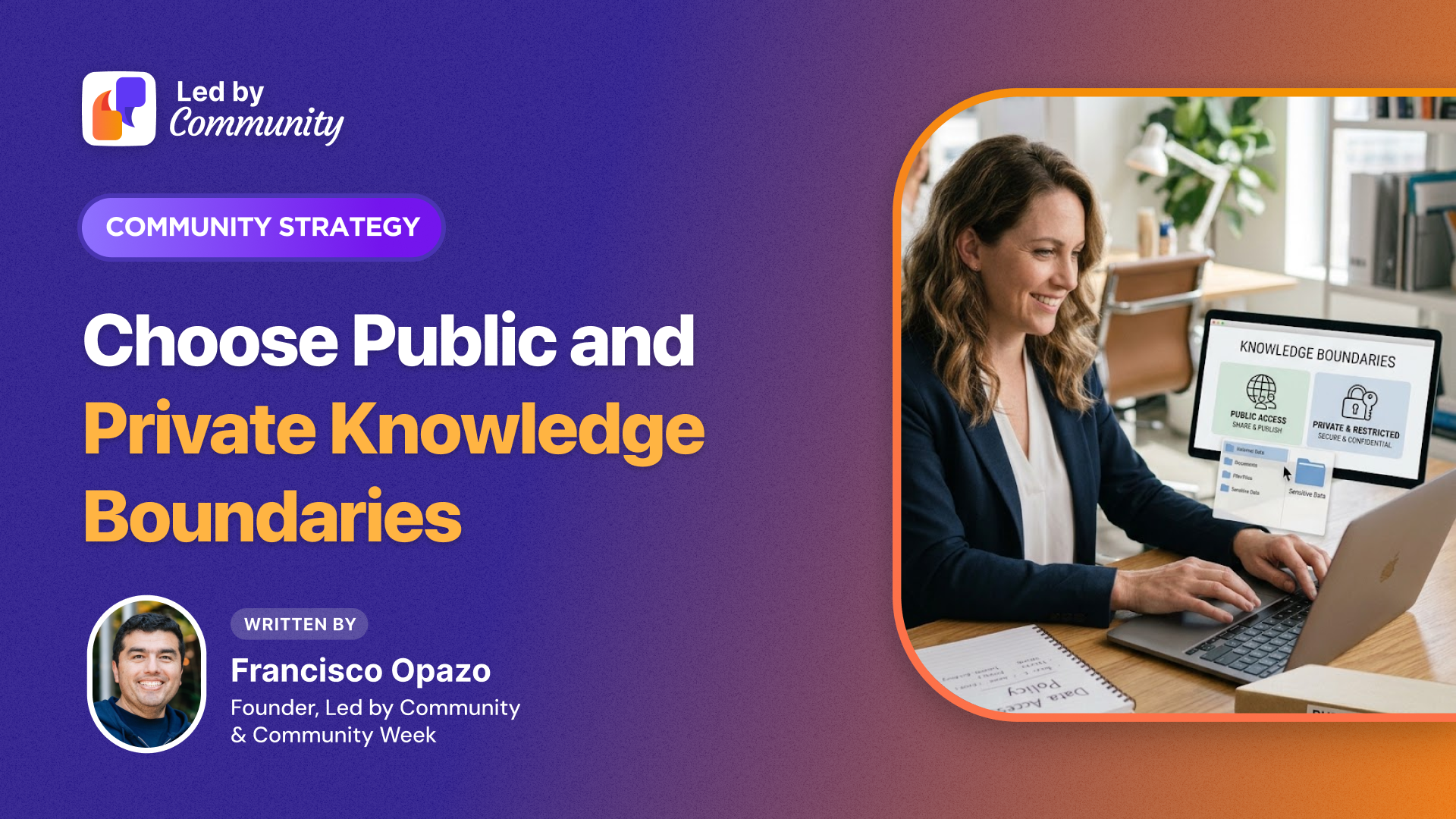
- Published
- 14 October 2026
- Topics
- Community knowledge, Customer experience, Content operations
Choose public and private community knowledge boundaries by separating reusable guidance from the customer details needed to resolve an individual problem. Define who needs each type of information, explain visibility before people contribute, and test the permissions behind those choices. Keep a clear route between shared learning and appropriately restricted assistance.
A useful answer can contain information that belongs to several audiences. The general method may help every customer, while the supporting screenshot reveals a particular organisation's working practices. Good visibility decisions preserve the lesson without treating the entire conversation as material for publication.
Separate the knowledge from the customer record
Begin with the purpose of the information. A general explanation of how an approval workflow behaves serves a different purpose from the configuration evidence needed to investigate one customer's unexpected result. They may appear in the same thread, but they do not need the same audience or retention arrangements.
This is a preview. The full piece is free for members (3 reads a day) and unlimited with Premium.
Read the full piece on Led by Community (free account, 3 reads a day)